
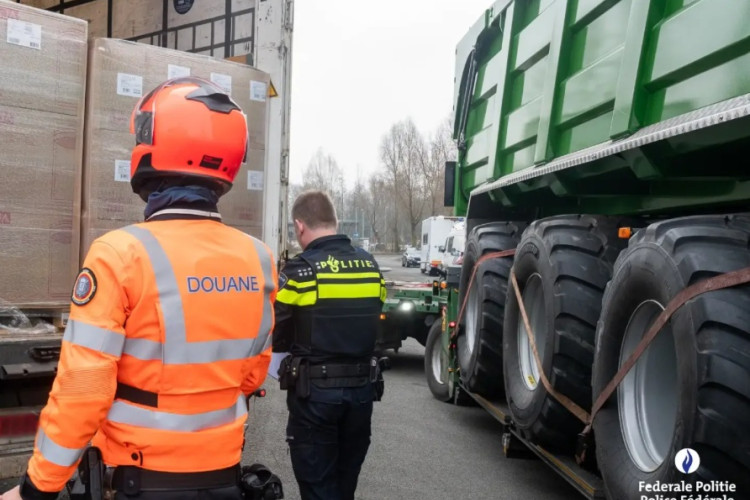
Lorry and bus operators across Europe should expect increased roadside checks from 16 November 2026. During the seven-day ROADPOL Truck & Bus campaign, officers will focus on driving and rest times, tachograph compliance, vehicle condition, vehicle weights and transport documents. It will be the final Europe-wide operation of its kind scheduled for 2026.
A coordinated inspection campaign targeting lorries and buses will begin on Monday, 16 November, on roads across Europe. ROADPOL’s Truck & Bus operation will continue until Sunday, 22 November, in the countries taking part in the network’s activities. It is the final one of three campaigns planned for 2026; the earlier operations took place from 9 to 15 February and from 4 to 10 May.
The campaign aims to detect road transport offences that could affect road safety and create unfair competitive conditions between carriers.
What officers will check The November operation will cover drivers, vehicles and the loads they carry. One of the main priorities will be compliance with rules on driving time, mandatory breaks and rest periods. Officers will review tachograph data to determine whether drivers have stayed within the permitted limits.
They will also check vehicle weights, as well as the positioning and securing of cargo. Inspectors will pay particular attention to overloading, which can reduce vehicle stability and braking performance. The technical condition of lorries and buses will also be assessed, including braking systems, tyres, lighting and other safety equipment.
During international operations, inspectors may also verify the required transport documents, licences and permits.
Second-generation tachographs in focus The correct use of digital tachographs, including second-generation smart devices (G2V2), will be a key part of the November checks.
Authorities will examine more than driving and rest-time records. They will also look for possible manipulation of the equipment and inconsistencies in the data it stores.
This is particularly important for carriers operating internationally. The requirement to replace older tachographs with second-generation devices was introduced in stages. Analogue tachographs and older digital units had to be replaced by 31 December 2024, while first-generation smart tachographs had to be replaced by 18 August 2025.
From 1 July 2026, the requirement to use second-generation smart tachographs also applies to vehicles with a permissible total weight above 2.5 tonnes and up to 3.5 tonnes when used for international commercial road haulage or cabotage.
By November 2026, carriers covered by these rules should already be operating vehicles equipped with G2V2 tachographs. During inspections, officers may therefore verify both whether the devices are being used correctly and whether the tachograph type meets the applicable requirements.
The final operation of 2026 The November campaign will conclude ROADPOL’s Truck & Bus schedule for 2026. Participating countries will carry out checks in parallel, but national authorities will decide where and how the inspections are conducted. For companies engaged in international transport, this may mean more frequent checks along European freight routes.
Before the campaign begins, carriers should review their transport documentation, confirm that tachograph data has been recorded correctly, check the vehicle’s technical condition and ensure that planned driver schedules comply with driving-time and rest requirements.
The Truck & Bus operation will run from 16 to 22 November 2026.


